Look up at the edge of your roof on a grey November morning and you might see green film on the fascia, brown streaks running down the boards, or a dark damp patch under the gutter. The obvious question is whether it just needs a clean or whether something is going wrong underneath.
In Bath and Bristol’s damp climate, it’s often a bit of both. Here’s what cleaning can realistically fix, what it can’t, and how to tell the difference from the ground.
First, What Are Fascias and Soffits?
The fascia is the board running along the bottom edge of your roof, directly behind the gutter. The soffit is the underside of the roof overhang, the panel you see when you look up at the eaves.
They’re made from either UPVC (plastic) or painted timber. Older houses, and many period properties around Bath, often have timber. Newer builds and renovated homes usually have UPVC, sometimes fitted over the original timber.
Why They Go Green, Streaky or Soaked
There are two separate causes, and it helps to keep them apart.
Algae and general grime. Fascias and soffits are shaded, sheltered and often damp, which is ideal for green algae. It’s mostly cosmetic and comes with the location, especially on north-facing elevations or under trees.
Overflowing gutters. When gutters fill with leaves and silt, rainwater spills over the front edge instead of reaching the downpipe. The dirty water runs down the fascia and leaves tide marks and vertical streaks. If it keeps happening, the water also soaks the board and can find its way behind it.
The second cause matters more. Algae is a nuisance, while repeated soaking is how timber starts to fail.
What Cleaning Can Fix
A proper clean of UPVC and well-sealed painted surfaces will deal with:
- Green algae and mould on fascias, soffits and the underside of the gutter
- Tide marks and streaking from gutter overflow
- General grime, cobwebs and spider debris that builds up in the eaves
- Dull, grubby white UPVC that’s just dirty rather than damaged
This is done with gentle methods rather than blasting. Soffits in particular have vents and joints that don’t want a hard jet of water.
A few things to be realistic about:
- Yellowed or oxidised UPVC may brighten but won’t always return to brand-new white
- Flaking paint on timber won’t be fixed by cleaning. Cleaning may show it up more
- Regrowth depends on the spot. A shaded, damp, tree-covered elevation will go green again sooner than a sunny, open one. If the cause was overflow and that’s now sorted, the clean lasts noticeably better
What Cleaning Can’t Fix: Signs of Rot
Timber fascias that have been wet for a long time can rot, and no amount of cleaning will help. Look out for:
- Soft or spongy wood. Press the lower edge of the board with a screwdriver or penknife (from a safe, low position, not a wobbly ladder). Solid timber resists. Rotten timber sinks in or crumbles
- Paint that’s blistering, peeling or bubbling in patches, especially along the bottom edge
- Cracking along the grain, or boards that have started to curl or pull away
- Black or dark brown staining that stays after the surface is cleaned
- Fungal growth or fluffy, crumbling texture on the timber
- Gaps at joints and corners, or a gutter that has started to sag because the board holding it is weak
- Soffits that bow, stain brown or have visible holes, which can point to a leak above, or to birds or insects getting in
A tip for UPVC: the plastic itself doesn’t rot, but the timber fascia hidden behind it can. If UPVC looks warped, has loose sections, or the gutter is pulling away, the board behind may be the problem.
If you spot any of these, the honest answer is that you need a carpenter or roofer to assess and repair or replace the affected section. It’s best done before more winter rain gets in.
A Quick Ground-Level Check
You can learn a lot without climbing anything:
- Wait for heavy rain and look at your gutters from outside. Water pouring over the front edge means they’re full or blocked
- Zoom in with your phone camera on the fascia and soffit, especially under corners and around downpipes
- Look for plants growing in the gutter, or tide marks and damp patches on the wall below
- Check for sagging. A dip in the gutter run often means it’s holding water, and the fixings or board behind may be struggling
If it’s only green and streaky, cleaning is the right fix. If you see softness, cracking or sagging, get it looked at before anything else.
Gutters First, Then Fascias
Cleaning a fascia while the gutter above is still blocked is pointless, because the first heavy rainfall will streak it again. The order that makes sense:
- Clear the gutters and downpipes once the leaves have mostly come down (usually November into December)
- Sort any repair the check above has turned up, such as leaking joints or a sagging run
- Clean the fascias and soffits so they stay clean for longer
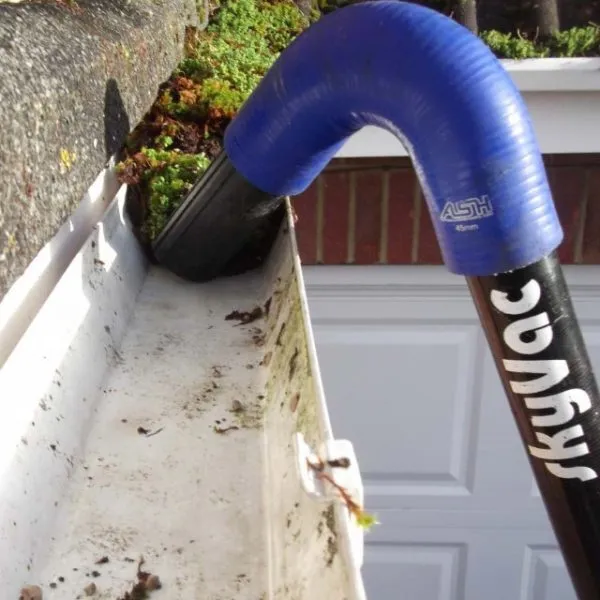
We clear gutters with the SkyVac ground-based vacuum system and by hand, so there’s no need for ladders against your fascias. If you’d like to know when yours need doing, our guide on how to tell if gutters need cleaning covers the signs, and our post on autumn leaves blocking downpipes explains the usual culprits. If you have solar panels, it’s also worth reading about birds nesting under panels, since the debris often ends up in the gutter below.
Why Do It Before Winter?
Winter is when gutters work hardest. A full gutter in heavy rain sends water over the front, down the fascia and onto the wall, and it can keep soaking the same spot week after week. Clearing gutters and cleaning the boards beforehand won’t make timber immune to damp, but it removes the biggest cause of repeated soaking. It also lets you spot the early signs of rot while there’s still time to fix them cheaply.
Fascia and Soffit Cleaning in Bath and Bristol
If the problem is green growth, grime or tide marks, our fascia and soffit cleaning in Bath is designed for exactly that. We’ll tell you straight if what we find looks like rot rather than dirt, so you can get the right tradesperson in rather than paying to clean something that needs replacing.
We’re based in Peasedown St John and cover Bath, Bristol and the surrounding area. Quotes are free, and we’re fully insured.
Not sure whether your fascias need a clean or a repair? Get in touch for a free quote and we’ll take a look. We’re open Monday to Friday 8am to 5pm and Saturday 9am to 3pm.