Most homeowners don’t think about their gutters until something goes wrong. By that point, a simple cleaning job has often turned into a damp wall, rotting fascia board, or flooded downpipe — all of which cost significantly more to repair than a routine clear.
Here are the signs that your gutters need attention, and what happens if you leave them.
Signs Your Gutters Are Blocked
1. Water spilling over the edge during rain
If you see water cascading over the front of the gutter during heavy rain rather than running neatly into the downpipe, the gutter is full. This is the most obvious sign — and the most ignored, because it only happens when it’s already raining and nobody wants to stand outside watching.
2. Plants growing from the gutters
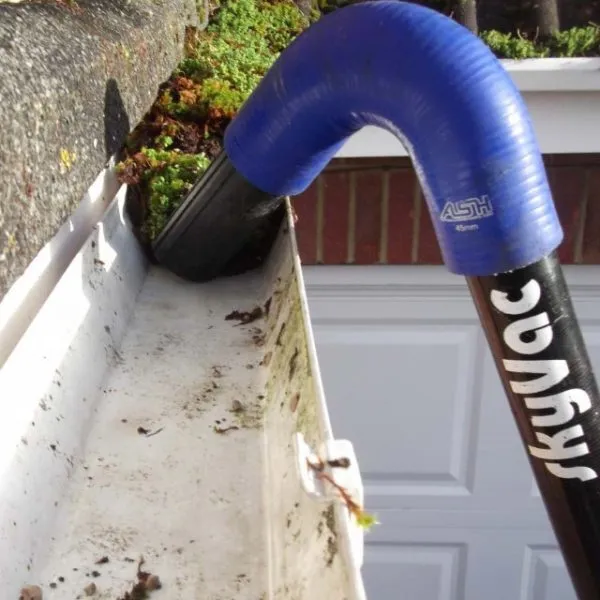
Moss, weeds, and even small shrubs growing from your gutters means debris has been sitting there long enough to create a growing medium. This level of blockage doesn’t happen overnight — if you can see plants, the gutters have been blocked for at least one full growing season.
3. Damp patches on interior walls
Gutters that overflow persistently saturate the wall behind them. This water travels through the masonry and appears as damp patches on internal walls — often in bedrooms or living rooms directly below the roofline. Damp like this encourages mould growth and, in older properties, can cause serious structural issues.
4. Marks or staining on the fascia boards
Fascias are the boards that run along the roofline directly behind the gutters. When gutters overflow, water sits against the fascia and eventually saturates the wood. You’ll often see dark tide marks, paint peeling, or soft spots in the wood. Once rot sets in, the fascia needs replacing — which typically costs several hundred pounds per run.
5. Sagging gutters
Gutters fill with debris, leaves, and standing water. A full section of guttering can weigh considerably more than an empty one. Over time, this weight pulls the gutter away from the fascia, causing it to sag and sit at the wrong angle. A sagging gutter drains poorly even when cleared, and often needs re-pitching or new fixings.
6. Birds or insects around the roofline
Birds picking at your gutters are often after nesting material or food — both of which accumulate in blocked gutters. Wasps nesting in or near the guttering is another indicator that there’s debris providing shelter. Neither is a problem in itself, but both suggest your gutters are full enough to be interesting to wildlife.
What Happens if You Ignore Blocked Gutters
Damp and mould
Persistent water running down an exterior wall eventually penetrates the masonry. Once moisture is inside the wall, it’s very difficult to dry out — especially in older stone or brick properties. The result is damp patches, peeling plaster, and black mould on internal surfaces.
Fascia and soffit rot
Timber fascias and soffits are particularly vulnerable. Once they start to rot, the only fix is replacement. A straightforward fascia replacement on a typical semi-detached house costs between £500 and £1,500 depending on size and access. A gutter clean costs a fraction of that.
Foundation damage
Downpipes that are blocked or gutters that overflow directly above the house foundations can cause water to pool at ground level. In clay soils, persistent saturation around foundations can cause movement over time.
Pest access
Gaps created by rotting fascias and loose guttering give rats, squirrels, and birds direct access into roof voids. Once inside, the damage they cause — to insulation, wiring, and roof timbers — is substantial.
How Often Should Gutters Be Cleaned?
Most UK homes need their gutters cleared once or twice a year. The key times are:
- Autumn (November/December) — after the leaves have fully fallen. This is the most important clear of the year. Leaf debris from surrounding trees is the primary cause of blocked gutters.
- Spring (March/April) — to clear any moss, silt, and debris that’s built up over winter and to check for frost damage to joints.
Properties surrounded by trees — particularly sycamore, beech, and oak — may need clearing more frequently. Gutters with a north-facing aspect accumulate moss faster and may need attention three times a year.
What a Professional Gutter Clean Involves
A professional clear isn’t just removing the obvious debris. A thorough gutter clean should include:
- Removing all leaves, moss, silt and compacted debris from the full run
- Flushing gutters and downpipes with water to confirm flow
- Checking all joints and unions for leaks
- Reporting any cracked, sagging or displaced sections
- Clearing any debris from around the downpipe outlet
At RG Extreme Pressure, we use a SkyVac industrial vacuum system — the same equipment used by commercial maintenance contractors. It clears gutters without ladders where possible, which means no risk of ladder damage to render, PVC or painted surfaces, and faster access on difficult two or three-storey properties.
If your gutters haven’t been cleared in the last 12 months, or you’ve noticed any of the warning signs above, get in touch for a free quote. We cover Bath, Bristol and across Somerset.