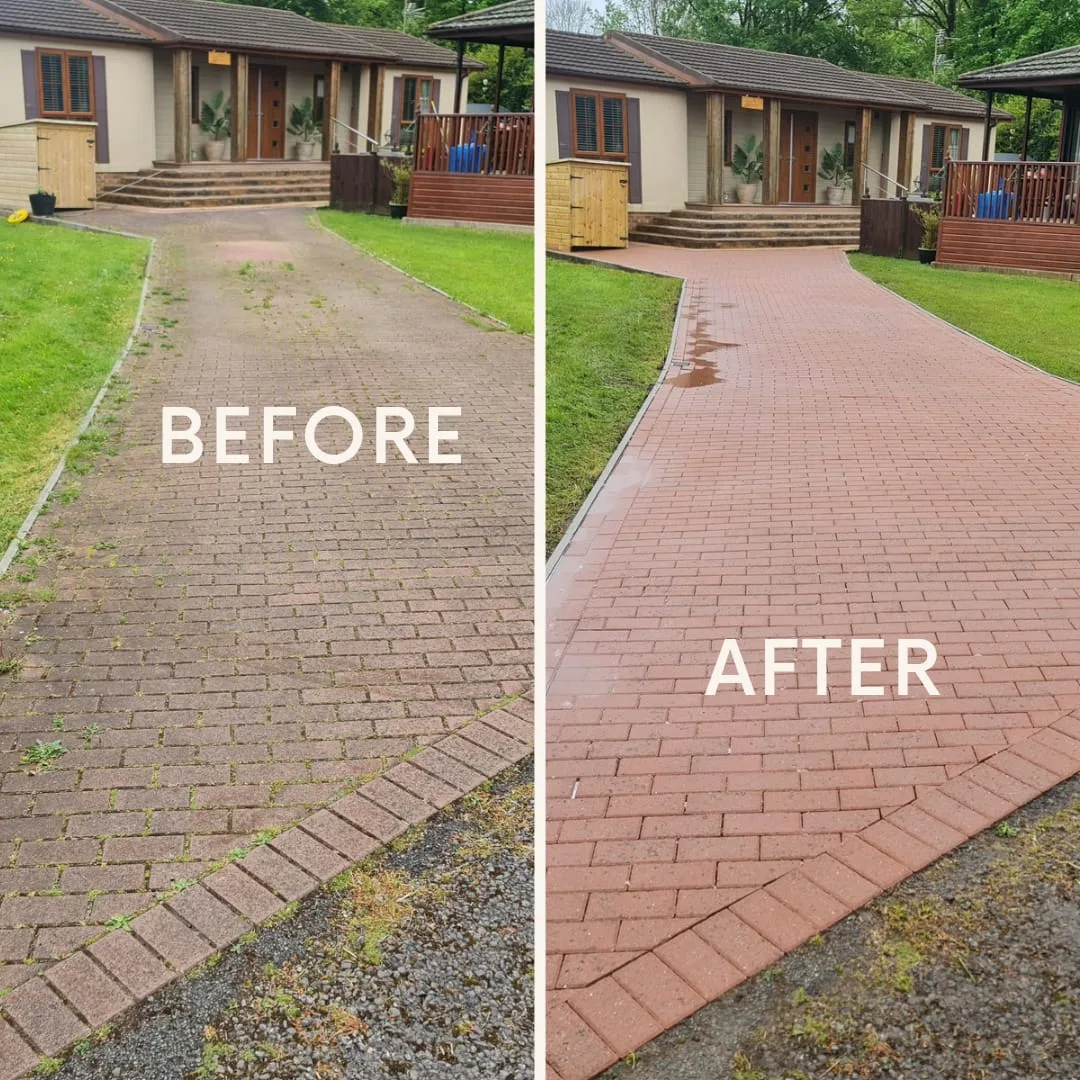
If you’ve searched for a jet wash in Brislington, Knowle or anywhere else in Bristol, chances are your drive or front steps have gone green and you’ve nearly gone over on them. It’s a very common autumn problem. Damp air, shade and a layer of wet leaves are all algae needs, and Bristol has plenty of all three.
This post covers what you can safely do this week, when a proper jet wash makes sense, and when it’s better to wait.
Why Bristol Drives Turn Green and Slippery in Autumn
The green film on a drive is mostly algae, sometimes with moss creeping in at the edges and joints. It grows on any damp surface that doesn’t dry out, and it’s at its worst:
- In shade: north-facing drives, spots beside hedges and walls, and the strip under overhanging trees
- Where water sits: low spots, the bottom of a slope, and beneath a leaking or overflowing gutter
- Under leaves: a wet leaf layer holds moisture against the surface for days and feeds the growth
Algae on its own is slippery when wet. Add a layer of wet leaves on top and a drive or step can become properly treacherous. The risk goes up again when the first frosts arrive, because a slimy surface freezes into a slick one.
Safe Stop-Gaps You Can Do Now
You don’t need to book anything to make a drive safer this week. These are all sensible, low-risk steps:
- Sweep the leaves off regularly. Don’t wait for every leaf to fall before you start on the main walking routes. A stiff outdoor broom once or twice a week keeps the worst of the slime from building up.
- Scrub the steps and the path to the door. A stiff brush and a bucket of warm water with a little detergent will take the top layer off a small area. It won’t kill the algae underneath, but it improves grip for a while.
- Use a proper algae or moss treatment, following the label. Garden-centre products can help on small areas. Check they’re suitable for your surface, and keep them away from plants and drains.
- Avoid household bleach. It can discolour paving, harm nearby plants and doesn’t do much about the root of the problem.
- Add grip where you need it. Outdoor anti-slip mats on steps, a handrail where there isn’t one, and a light by the front door all help on dark evenings.
- Grit the worst spots if frost is forecast. A little sharp sand or grit on steps gives traction. Use rock salt sparingly, as it can mark some paving over time.
These are stop-gaps. They make the surface safer for now, but they won’t leave it looking like new.
Why You Shouldn’t Jet Wash at 4°C or Below
This is the part people often get wrong. A jet wash puts a lot of water onto the surface, and porous materials like block paving, concrete, sandstone and tumbled setts soak some of it up. If that water freezes before it has dried out, two things can happen:
- The surface can flake or spall as the trapped water expands
- You can end up with a wet, icy drive that’s more dangerous than the green one you started with
So the rule we work to is simple: don’t jet wash porous surfaces at 4°C or below, or when a frost is forecast within the next 24 hours. That includes DIY jobs on a bright cold Saturday morning that turns to a frosty night.
In practice that means watching the forecast for a mild, ideally dry spell, with daytime temperatures comfortably above freezing and no frost overnight. Autumn usually offers a few of these windows, and they get rarer as December approaches. That’s why professional jobs get timed around the weather rather than booked for a fixed date.
When Is the Best Time to Clean?
For most Bristol homes, the best time is:
- After most of the leaves are down, so you’re not cleaning the same surface twice
- During a mild spell, so the surface can dry afterwards
- Before the first hard frosts, so you go into winter with a surface that has some grip
If you have a big tree overhead and leaves are still coming down, a quick sweep now and a clean once they’ve dropped is usually the better plan. If a drive is already hazardous, don’t wait for the perfect moment. Use the stop-gaps above and clean the first time the forecast allows.
Jet Washing Your Own Drive: What to Watch For
A domestic pressure washer can do a decent job on a small, sturdy surface. A few cautions:
- Block paving: too much pressure or too close a lance blasts the sand out of the joints. That lets weeds and moss in and can leave blocks loose, so the drive may need re-sanding afterwards.
- Soft stone and older paving: the surface can be etched or scarred, leaving stripes that show up for years.
- Tarmac and imprint concrete: high pressure can lift the surface or fade the colour.
- Splash and runoff: green slurry ends up on walls, windows, cars and neighbours’ paths if you’re not careful.
- Streaking: hand-held lances often leave a striped finish unless you use a surface cleaner attachment and overlap carefully.
If you do it yourself, work in a mild spell, keep the lance moving and test a small hidden patch first. Make sure the drive can drain properly and dry afterwards.
What Professional Driveway Cleaning Involves
If you’d rather hand it over, a professional driveway cleaning service in Bristol will normally use a combination of equipment and techniques: a rotary surface cleaner for an even finish, a suitable detergent or biocide for the algae, and the right pressure for your particular surface. We’re fully insured, and we’ll look at the surface first, whether it’s block paving, concrete, stone or something else, before deciding how to treat it.
On a block-paved drive, we’ll also check the joints and advise if they need re-sanding afterwards.
Be Realistic: How Long Will It Stay Clean?
Anyone who promises a drive will stay spotless all winter is overselling. After a clean:
- A drive in full sun, with good drainage and no overhanging trees, can stay clean for a long time.
- Shaded and north-facing areas go green again first, and steps beside a wall or hedge often show it within months.
- Wet leaves left to sit on the surface will bring staining and slime back faster.
Keeping on top of leaves and getting gutters cleared makes a difference. Overflowing gutters send dirty water down onto the drive below, which is one of the reasons some patches go green year after year. If yours are due, see our gutter cleaning in Bristol or read how to tell if gutters need cleaning.
Sealing: One to Think About for Spring
Sealing a drive after cleaning can help keep it cleaner for longer and makes later cleans easier. It does need dry, settled conditions to be applied properly, so it isn’t a late-autumn job. If it’s something you’re considering, it’s worth planning ahead for spring. We’re a PureSeal Approved Applicator for driveway and patio sealing, and we’re happy to talk it through when you ask for a quote.
A Quick Checklist for This Week
- Sweep leaves off the drive, steps and path to the door
- Scrub the worst slippery patches and add grip where needed
- Check your gutters and downpipes aren’t spilling onto the surface below
- Keep an eye on the forecast for a mild, dry spell, and avoid jet washing at 4°C or below or with frost due within 24 hours
- Decide whether to clean it yourself or book someone in
If your drive in Brislington, Knowle or elsewhere in Bristol has gone green and you’d like it cleaned in the next mild spell, you’re welcome to ask for a free quote. We’re rated 5.0 from 115 Google reviews, and we’re open Monday to Friday 8am to 5pm and Saturday 9am to 3pm.