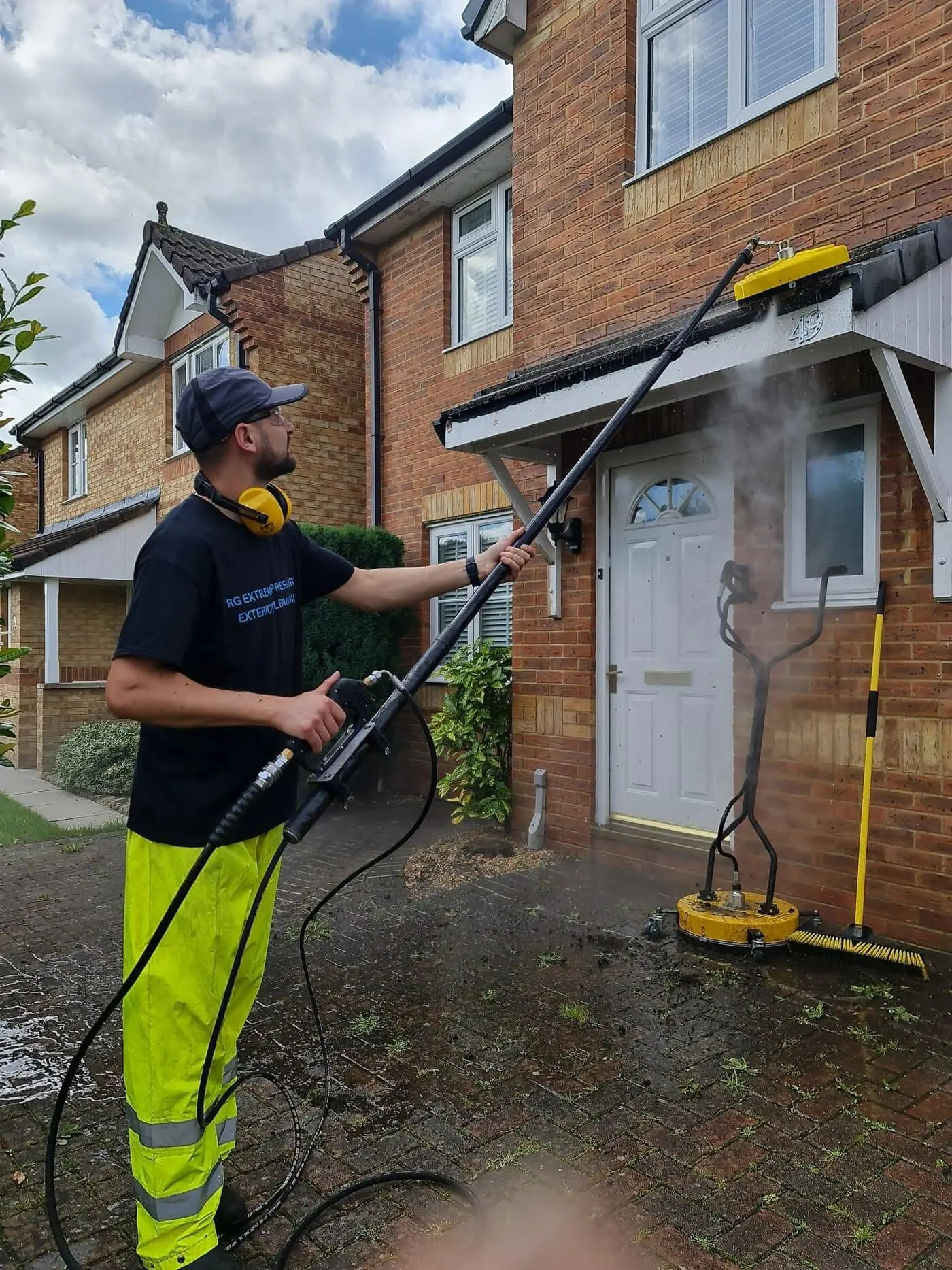
Most homeowners only think about jet washing the driveway when it’s visibly black with grime or slippery underfoot. By that point, you’re not just cleaning — you’re trying to reverse months of embedded moss, algae, and organic staining. A bit of forward planning saves you money and protects the surface long-term.
Here’s a practical guide to how often each common driveway type needs cleaning.
Block Paving: Once a Year Minimum
Block paving is the most common driveway surface in Bath and Bristol, and it’s also the one that attracts the most organic growth. The joints between blocks trap moisture and create perfect conditions for moss and algae to root. Once those roots get into the jointing sand, they start to destabilise it — and you end up with sunken, rocking blocks.
Annual jet washing removes moss before it can do structural damage. After cleaning, the joints are re-sanded with kiln-dried sand to stabilise the surface. If your driveway is shaded by trees or a north-facing wall, you may need cleaning twice a year.
Signs you’ve left it too long: green or black discolouration along the joints, visible moss growth, or blocks that move when you walk on them.
Tarmac: Every 18–24 Months
Tarmac is more forgiving than block paving — the smooth surface gives algae fewer places to anchor. But tarmac driveways still accumulate oil stains, tyre marks, and general discolouration from road dirt.
Jet washing tarmac every 18–24 months keeps the surface looking clean without the risk of over-washing, which can loosen fine aggregate over time. Use a rotary surface cleaner rather than a lance — it distributes pressure evenly and avoids streaking.
Oil stains on tarmac need a degreaser applied before jet washing. Leaving them untreated means the oil breaks down the binder in the tarmac surface over time.
Concrete: Every 12–18 Months
Concrete is durable and easy to clean, but it stains readily — particularly from leaves, bird droppings, and oil. Concrete also tends to develop a grey-green algae film in wet weather, which makes the surface slippery and looks neglected.
For plain concrete, cleaning every 12–18 months is usually enough. Decorative or printed concrete needs more care — high pressure can lift sealant, so a lower pressure wash with a surface cleaner is the correct approach.
After cleaning decorative concrete, re-sealing extends the life of the colour and pattern significantly.
Gravel: Different Problem Altogether
Gravel driveways don’t get jet washed — pressure washing would scatter the stones everywhere. Instead, gravel maintenance involves raking to redistribute stone, removing weeds by hand or with a weed suppressant, and occasionally topping up with new gravel.
Weed membranes under gravel help, but they degrade over time and eventually allow weeds through. If your gravel is overwhelmed with weeds, the most effective fix is lifting the gravel, replacing or laying new membrane, and re-laying the stone.
The Seasonal Factor in Bath and Bristol
Both cities sit in a wet, mild climate — exactly the conditions that algae and moss thrive in. South-facing driveways that get full sun can go longer between cleans. North-facing, shaded, or tree-lined driveways in areas like Clifton, Bathampton, or the Bath countryside will green up significantly faster.
Autumn is the worst season for driveway build-up: fallen leaves break down and stain concrete and block paving, and the damp conditions from October through to April accelerate algae growth. Cleaning in late spring removes winter accumulation; cleaning again in autumn prevents leaf staining from setting over winter.
When to Clean More Frequently
Some circumstances call for more regular cleaning:
- High foot traffic or vehicle use — commercial properties, rental properties, or driveways used by multiple vehicles accumulate grime faster
- Adjacent trees — especially sycamore, lime, and oak, which drop sticky residue that stains surfaces and feeds algae
- Post-building work — construction dust, cement splashes, and residue from scaffolding all need professional removal
- Before selling — a clean driveway significantly improves kerb appeal and is one of the cheapest ways to add perceived value
DIY vs. Professional Cleaning
A consumer pressure washer (typically 100–150 bar) will shift loose surface grime. It won’t remove embedded algae, won’t clean joints effectively on block paving, and risks streaking if used with a lance rather than a surface cleaner.
Professional jet washing equipment runs at higher pressure with industrial surface cleaners. Combined with pre-treatment chemicals — biocide application, degreaser for oil stains, alkaline detergent for organic growth — professional cleaning removes what domestic machines leave behind. Re-sanding after block paving cleaning is also a professional-only job if you want it done properly.
If your driveway in Bath, Keynsham, or the surrounding areas is overdue a clean, get in touch for a free quote. We cover all driveway types across Bath, Bristol, and Somerset.